

The Complete Guide to SaaS Reseller Programs: Your 2025 Blueprint for Success
SaaS reseller programs offer unprecedented opportunities in 2025:
- Market Growth: SaaS market approaching $887 billion by 2030 with continued expansion
- Key Benefits: Scalable recurring revenue, white-label branding control, no development costs
- AI Integration: Access to proven AI-powered platforms during rapid market adoption
- Program Features: Competitive commissions, comprehensive training, no-code deployment
- Success Factors: Choose programs with strong APIs, validated market demand, and industry customization
The digital transformation wave has created a goldmine of opportunities, and SaaS reseller programs are leading the charge. With global SaaS revenue projected to reach $887.05 billion by 2030 and growing at 15.65% annually, you’re looking at one of the fastest growing business models today.
But here’s what makes 2025 different: the barriers to entry have virtually disappeared. You no longer need massive upfront investments or technical expertise to offer software solutions. Today’s white-label SaaS platforms let you launch branded software products in minutes, not months.
Whether you’re a telecom agent looking to diversify, an IT consultant seeking recurring revenue, or an entrepreneur ready to tap into the digital economy, SaaS reseller programs provide the perfect launchpad. You get all the benefits of offering cutting-edge software without the headaches of development, maintenance, or technical support.
The demand is there. Businesses across every industry are actively seeking solutions for communication, marketing automation, customer management, and AI-powered tools. Your role as a reseller is to bridge that gap, offering curated solutions under your brand while building relationships that generate recurring monthly revenue.
What Are SaaS Reseller Programs?
SaaS reseller programs are partnership agreements that allow you to sell software solutions developed by other companies under your own brand. It’s the digital equivalent of private labeling. You’re taking proven, market-tested software and presenting it as your own solution.
The magic happens in three key areas:
- Speed to market. Instead of spending years developing software, you can launch new services within days.
- Risk mitigation. You’re selling solutions that already have paying customers and proven demand.
- Scalability. Once configured, these platforms can serve hundreds or thousands of customers with minimal additional effort from you.
Modern reseller SaaS platforms have evolved beyond affiliate marketing. Today’s programs offer comprehensive white-label solutions where you control pricing, branding, customer relationships, and feature configurations. Some programs even provide dedicated partner managers and co-selling opportunities to help you close larger deals.
The distinction between different program types matters. Standard reseller programs typically involve selling existing packages with your markup. White-label programs allow complete rebranding and customization. Value-added reseller (VAR) programs encourage you to bundle additional services around the core software. Each model offers different levels of control and profit potential.
What’s driving the explosion in 2025? AI technology, no-code platforms, and increasing demand for specialized business solutions. Companies need tools for everything from customer communication to data analytics, but they don’t want to manage multiple vendor relationships. As a reseller, you become their single source for integrated solutions.
How Do SaaS Partner Programs Generate Revenue?
Understanding the revenue mechanics behind SaaS partner programs helps you evaluate opportunities and forecast earnings potential. Most programs operate on recurring revenue models, meaning your initial sale converts into monthly income for as long as the customer remains active.
Commission structures vary across programs. Entry-level programs typically offer lower monthly recurring commissions, while premium white-label opportunities can reach higher lifetime commissions. Some programs offer aggressive commission rates to attract quality partners during market expansion phases.
Revenue-sharing models provide different approaches to earning. Flat-rate commissions give you a fixed percentage regardless of customer usage. Tiered commissions increase your percentage as you hit volume targets. Usage-based commissions fluctuate with customer consumption, offering higher earning potential but less predictability.
Markup flexibility in white-label programs offers additional profit potential. You purchase licenses at wholesale rates and set your own retail pricing. This model works particularly well for industry-specific solutions where you can justify premium pricing through specialized expertise and support.
Advanced programs provide performance bonuses and quota incentives. Meet certain sales targets, and your commission rates increase. Some programs offer quarterly bonuses based on content quality and marketing effectiveness. These incentives reward partners who actively promote and support the platform.
Which Are the Best SaaS Reseller Programs in 2025?
Navigating the SaaS reseller options requires understanding which program categories offer the best combination of market demand, profit potential, and partner support. Evaluate programs based on these proven categories and their characteristics:
AI-Powered Communication Solutions
These programs center on chatbots, conversational AI, and customer communication platforms. Look for providers offering white-label customization where you can train AI agents on client-specific data. The best programs handle technical complexities like natural language processing and API integrations, letting you focus on sales and customer success. Expect recurring commission structures and comprehensive partner support as AI adoption accelerates across industries.
Marketing Automation Platforms
Email marketing, campaign management, and customer journey automation programs typically offer strong market demand and proven ROI for clients. Successful programs provide extensive template libraries, A/B testing capabilities, and detailed analytics dashboards. Look for platforms offering both commission-based and white-label licensing options, along with marketing co-op funds and comprehensive training programs.
Customer Relationship Management (CRM) Systems
CRM reseller programs remain consistently profitable due to the universal business need for customer data management. The strongest programs offer industry-specific customizations, extensive integration ecosystems, and scalable pricing models. Evaluate programs based on their onboarding support, certification pathways, and deal registration protection for qualified opportunities.
Unified Communications Platforms
Communication reseller platforms enable partners to offer voice, video, messaging, and collaboration tools under their own brand. These platforms provide the infrastructure and tools that let you become a communication service provider without building your own network. The strongest programs offer SIP trunking foundations, VoIP reseller capabilities, and integrated communication solutions that you can white-label and sell to your clients. Look for platforms providing comprehensive technical support, automated provisioning systems, and compatibility with existing business phone systems while handling the backend complexities of billing and customer support.
Project Management and Productivity Tools
These programs serve the growing market for team collaboration and workflow automation. Strong programs offer flexible customization options, extensive third-party integrations, and industry-specific templates. Evaluate based on their scalability features, user adoption support, and ability to serve diverse business sizes and types.
Evaluation Criteria for All Categories:
- Commission structure transparency and payment reliability
- Technical support depth and partner training quality
- Market demand validation and competitive positioning
- Platform customization capabilities and white-label options
- Integration ecosystem strength and API accessibility
What Makes a White-Label SaaS Platform Worth Reselling?
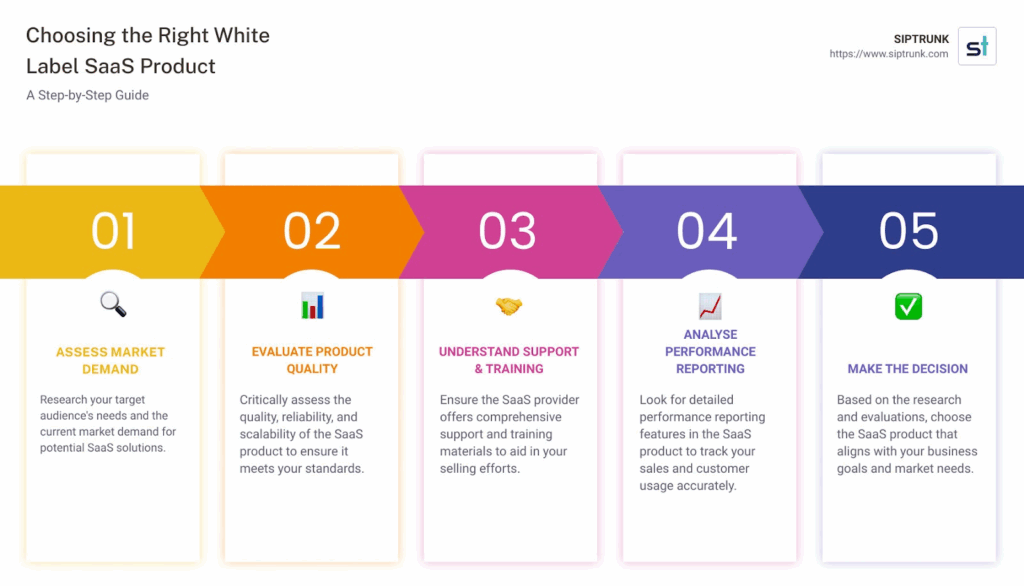
Choosing the right white-label SaaS platform requires evaluating multiple factors beyond just commission rates. The most successful resellers focus on platforms that align with their market expertise and customer needs while offering genuine competitive advantages.
Market demand validation should be your first consideration. Look for platforms solving real business problems with proven customer adoption. AI-powered solutions, marketing automation, and customer communication tools consistently show strong demand across industries. According to analysis, 95% of organizations are expected to adopt AI-powered SaaS applications, making this a particularly attractive sector.
Technical reliability forms the foundation of your brand reputation. Partner with platforms that maintain 99.9%+ uptime, provide transparent service status reporting, and have established incident response procedures. Your customers will blame you, not the underlying platform, when systems go down.
Customization depth varies across white-label programs. Basic programs allow logo and color changes. Advanced programs provide custom domain hosting, API access for integrations, and the ability to modify user interfaces. The level of customization you need depends on how much you want the solution to feel like your own product.
Partner support infrastructure can make or break your reseller success. The best programs provide dedicated partner managers, comprehensive training materials, sales enablement resources, and technical support channels. Co-selling opportunities help you close larger deals with your customers.
Pricing transparency and margin protection ensure sustainable business models. Avoid programs with complex pricing structures or frequent price changes that erode your margins. Look for platforms that provide clear wholesale pricing, volume discounts, and protection from direct sales competition in your territory.
Integration ecosystem importance has grown as businesses use increasingly complex software stacks. Platforms with robust APIs and pre-built integrations with popular business tools are easier to sell and implement. These characteristics reduce deployment friction and increase customer satisfaction.
Platform innovation velocity affects your long-term competitiveness. Partner with companies that consistently release new features, adapt to market changes, and invest in emerging technologies like artificial intelligence and automation. Stagnant platforms eventually lose market share to more innovative competitors.

How Do You Choose the Right SaaS Reseller Program for Your Business?
Beyond platform characteristics, successful program selection requires aligning opportunities with your existing business strengths and market position. This approach maximizes your competitive advantages while minimizing implementation risks.
Leverage existing customer relationships as your primary evaluation filter. Programs that complement your current service offerings create natural upselling opportunities and reduce customer acquisition costs. If you currently provide IT consulting, marketing automation platforms integrate seamlessly with your expertise. Communication service providers benefit most from unified communications solutions.
Analyze your market positioning within your industry vertical. Specialists in healthcare, finance, or manufacturing can command premium pricing for industry-specific solutions with built-in compliance features. Generalists benefit from versatile platforms that serve multiple industries but may face more price competition.
Evaluate implementation timeline requirements based on your capacity and customer expectations. Some programs require intensive training periods and certification processes. Others offer immediate deployment with basic onboarding. Match program requirements with your available time investment and customer delivery timelines.
Consider long-term partnership potential rather than focusing solely on initial terms. Programs with strong product development roadmaps, expanding feature sets, and growing market presence provide better long-term revenue stability. Assess the vendor’s financial stability, market reputation, and commitment to partner success.
Review competitive positioning within your target market. If multiple resellers already serve your geographic area or industry, evaluate differentiation opportunities through value-added services, specialized expertise, or superior customer support. Markets with limited competition offer easier entry but may indicate lower demand.
What Are the Key Benefits of SaaS Reseller Programs?
The appeal of becoming a reseller SaaS partner surpasses revenue opportunities. These programs offer advantages that can transform your business model and competitive position in the market.
Accelerated time to market represents perhaps the most significant advantage. Traditional software development takes months or years, but reseller programs let you launch new services immediately. This speed advantage becomes clutch when responding to customer requests or market opportunities. Instead of saying “we’ll look into that,” you can often provide solutions within days.
Reduced business risk comes from partnering with proven platforms rather than developing unproven solutions. You’re selling software that already has paying customers, established feature sets, and resolved technical challenges. You reduce the risk of investing time and resources in solutions that might not find market acceptance.
Scalable revenue models differentiate SaaS reselling from traditional service businesses. Once you’ve established the sales and support processes, adding new customers doesn’t proportionally increase your costs. This scalability means your profit margins can improve as you grow, unlike consulting or other time-based services.
Enhanced brand credibility results from offering sophisticated software solutions alongside your existing services. Customers perceive businesses that provide comprehensive technology solutions as more capable and trustworthy. This enhanced credibility often leads to larger deals and stronger customer relationships across all your service offerings.
Diversified revenue streams provide financial stability and growth opportunities. Instead of depending entirely on one-time project fees or limited service categories, you’re building monthly recurring revenue that continues regardless of your daily activity level.
Access to enterprise-grade technology without corresponding development investment gives smaller businesses competitive advantages previously available only to large corporations. You can offer sophisticated solutions while maintaining cost advantages and customer service flexibility that larger competitors often cannot match.
Continuous product improvement happens automatically as platform partners invest in development and new features. Your offerings become more valuable over time without additional investment from you. Innovation proves particularly important in rapidly evolving areas like artificial intelligence and automation technology, where staying current would otherwise require significant internal resources.
What Challenges Do SaaS Resellers Face, and How Can You Overcome Them?
While SaaS reseller programs offer substantial opportunities, successful partners understand and prepare for predictable challenges that can impact their success.
Initial customer acquisition often presents the steepest learning curve for new resellers. Unlike established software companies with large marketing budgets, you’re building awareness from scratch. Overcome this challenge by leveraging your existing customer relationships first. Your current clients already trust your recommendations, making them ideal prospects for new software solutions.
Technical support responsibility can overwhelm resellers who are unprepared for customer questions and implementation issues. Even with platform-provided documentation, customers will contact you first when problems arise. Build expertise by investing time in thorough platform training and establishing clear escalation procedures with your software partner.
Pricing strategy complexity increases when you control markup decisions in white-label programs. Price too high, and you lose deals to competitors. Price too low, and you damage profit margins and perceived value. Research competitive pricing thoroughly and position your solution based on unique benefits rather than competing solely on price.
Market saturation concerns arise as popular platforms attract multiple resellers in similar markets. Differentiate through specialized expertise, superior customer service, or bundled offerings that competitors can’t match. Focus on becoming the recognized expert in specific industry applications rather than attempting to serve all markets equally.
Platform dependency risks emerge when your business becomes heavily reliant on a single software partner. If they change terms, increase pricing, or discontinue their reseller program, your business could be significantly impacted. Minimize this risk by diversifying across multiple programs and maintaining some service offerings that don’t depend on external platforms.
Customer churn management requires ongoing attention since your recurring revenue depends on customer retention. Unlike one-time sales, you need to ensure ongoing customer success and satisfaction. Develop customer success processes that include regular check-ins, usage monitoring, and proactive support to identify and resolve issues before they lead to cancellations.
Competitive pressure from both other resellers and direct platform sales can squeeze margins and make customer acquisition more difficult. Stay competitive through superior local service, industry expertise, and value-added services that platforms can’t provide directly. Build relationships strong enough that customers wouldn’t consider switching even if offered slightly better pricing elsewhere.
How Do You Build Long-Term Success as a SaaS Reseller?
The most successful resellers treat their partnerships as long-term business investments requiring ongoing development and optimization.
Develop deep platform expertise that goes beyond basic sales knowledge. Become genuinely proficient in the solutions you’re selling. This expertise allows you to provide valuable consultation during sales processes, design optimal implementations, and troubleshoot issues that arise. Customers are more likely to buy from and remain loyal to partners who demonstrate real competency.
Build comprehensive customer success processes that ensure clients achieve their desired outcomes from the software. Consider structured onboarding procedures, regular usage reviews, and proactive optimization recommendations. Customer success directly impacts retention rates, which determine your long-term revenue from each client relationship.
Establish thought leadership in your chosen market segments through content marketing, speaking engagements, and industry participation. Position yourself as an expert in applying technology solutions to specific business challenges. Thought leadership generates inbound leads and commands premium pricing for your services.
Create scalable systems for lead generation, customer onboarding, and ongoing account management. As your business grows, you’ll need processes that don’t require your direct involvement in every customer interaction. Invest in CRM systems, automated marketing tools, and standardized procedures that allow you to serve more customers efficiently.
Diversify strategically across complementary platforms and services. While avoiding too much complexity, look for opportunities to offer integrated solutions that solve multiple customer problems. Diversification increases customer lifetime value and provides resilience if individual platforms face market challenges.
Monitor and optimize performance metrics, including customer acquisition costs, lifetime value, churn rates, and profit margins per customer segment. Use this data to identify your most profitable market segments and optimize your sales and marketing investments accordingly.
Maintain strong partner relationships through regular communication, feedback sharing, and participation in partner events and training programs. Strong relationships with your platform partners can lead to deal protection, marketing support, and early access to new features that provide competitive advantages.
Frequently Asked Questions About SaaS Reseller Programs
Can you make money with SaaS reseller programs? Yes, SaaS reseller programs can be highly profitable, especially those offering recurring revenue models. Successful resellers often earn competitive monthly commissions on customer subscriptions, with some generating six-figure annual revenues from their programs. The key lies in choosing programs with strong market demand, focusing on customer retention to maximize lifetime value, and developing expertise that commands premium pricing.
What’s the difference between affiliate and reseller programs? Affiliate programs typically involve promoting products for commission without direct customer relationships. Resellers purchase or license products at wholesale rates, manage customer relationships directly, and often have pricing control. White-label reseller programs go further, allowing complete rebranding so customers see your company as the software provider. Reseller programs generally offer higher profit potential but require more involvement in sales and support.
How do I choose between different SaaS partner programs? Focus on programs that align with your existing customer base and expertise. Evaluate market demand for the solution, commission structure sustainability, technical support quality, and customization capabilities. Consider your technical abilities and available time for training and support. The best programs offer strong partner support, transparent pricing, and solutions that solve real customer problems you already understand.
What support should I expect from a quality reseller program? Quality programs provide comprehensive onboarding training, ongoing technical support, sales enablement materials, and dedicated partner managers. Look for programs offering marketing co-op funds, lead sharing opportunities, and regular training updates. The best partners also provide customer success resources, implementation guidance, and escalation procedures for technical issues beyond your expertise level.
Explore the Possibilities of SaaS Reselling
The SaaS reseller options in 2025 offer unprecedented opportunities for businesses ready to embrace the digital transformation wave. With SaaS spending growing by 20% and new AI-powered solutions launching continuously, the timing has never been better to establish yourself as a technology solutions provider.
The recurring revenue model of SaaS creates incredible opportunities for building sustainable, scalable businesses. Unlike traditional consulting or service models, where you trade time for money, successful SaaS reselling creates compounding returns where each satisfied customer contributes to your monthly revenue for years to come.
SIPTRUNK offers comprehensive reseller programs designed specifically for telecom professionals and IT consultants looking to expand their service offerings with cutting-edge communication solutions. Get started today and discover how our white-label platform can help you build recurring revenue while delivering exceptional value to your customers.

Mitch leads the Sales team at BCM One, overseeing revenue growth through cloud voice services across brands like SIPTRUNK, SIP.US, and Flowroute. With a focus on partner enablement and customer success, he helps businesses identify the right communication solutions within BCM One’s extensive portfolio. Mitch brings years of experience in channel sales and cloud-based telecom to every conversation.