

The Definitive Guide to Reselling SIP Trunks
The SIP trunking market is projected to reach $181 billion by 2031, and SIP resellers who position themselves strategically today will capture a significant share of that growth.
- The market stands at $85.07 billion in 2026, growing at a CAGR of 16.38%.
- White-label partnerships eliminate infrastructure costs while maximizing profit margins.
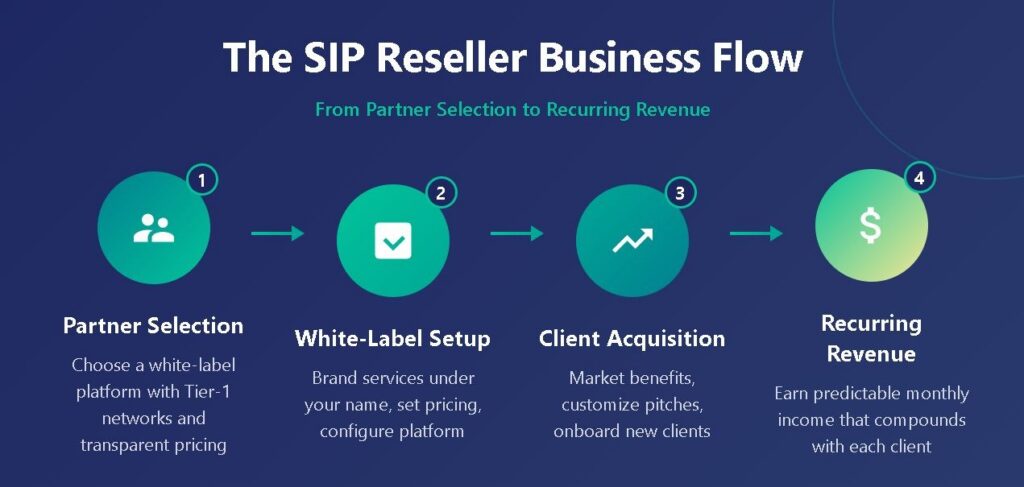
- Recurring revenue models create predictable income that compounds with each new client.
- Traditional phone systems are being phased out worldwide, creating urgent demand for modern solutions.
If you want to build a sustainable telecommunications business, becoming a SIP reseller through a white-label platform offers the clearest path to profitability without the burden of building your own infrastructure.
SIP trunking is one of the most prominent shifts in business communications over the past decade. The SIP trunking market is expected to grow from $85.07 billion in 2026 to $181.58 billion by 2031, driven by cost savings of 25% to 65% over legacy PRI lines.
Technology resellers who understand this market have two choices: watch their clients migrate to competitors who offer modern SIP trunking solutions, or incorporate these services into their portfolio. Businesses that have relied on copper-based phone systems for decades are actively seeking alternatives, and SIP resellers are positioned to meet that demand.
What Do SIP Resellers Need to Know About SIP Protocols and Trunking?
Before you can effectively resell SIP trunks, you need a solid understanding of the technology you’re selling. Two foundational concepts form the basis of every conversation you will have with prospective clients.
What Is SIP Protocol?
Session Initiation Protocol (SIP) is the signaling standard that initiates, maintains, and terminates real-time communication sessions. It handles voice, video, and messaging services, making it versatile enough to power modern unified communications.
SIP should be distinguished from Voice over Internet Protocol (VoIP). While SIP is the protocol that manages connections, VoIP is the method of transmitting the actual voice data. SIP calls use VoIP to send analog call data over an internet connection. Understanding this distinction helps SIP resellers explain the technology clearly to clients who may confuse the two terms.
How Do SIP Trunks Work?
SIP trunks are virtual phone lines that enable businesses to make and receive calls over the internet. Unlike traditional phone lines that require physical copper connections, SIP trunks carry digital data packets from a Private Branch Exchange (PBX) through the network to their destination. Each trunk can support multiple simultaneous calls without the capacity limitations of legacy systems.
The flexibility of SIP trunks makes them attractive for growing businesses. Adding capacity takes minutes rather than weeks. Companies migrating from traditional phone systems gain immediate benefits in cost reduction, scalability, and access to advanced features that were previously available only to enterprise organizations.
What Benefits Can a SIP Trunk Reseller Offer Clients?
Understanding the value proposition you deliver makes it possible to have meaningful conversations with prospects. Clients considering SIP trunking expect you to explain how the technology addresses their specific business challenges.
Cost Reduction and Operational Efficiency
The most immediate benefit for clients is cost savings. SIP trunking eliminates the need for separate voice and data networks, reducing infrastructure complexity and maintenance expenses. Businesses no longer pay for unused capacity since they can scale channels based on actual call volume. Long-distance calls become more affordable because SIP routes calls over the internet rather than through traditional toll networks.
Clients can also eliminate expensive hardware investments, avoiding the ongoing costs of maintaining IP-PSTN gateways, Basic Rate Interfaces (BRIs), and Primary Rate Interfaces (PRIs).
Scalability and Flexibility
Traditional phone systems require ordering and installing new lines whenever a business grows. With SIP trunking, adding capacity happens through a control panel in minutes. Clients can acquire local phone numbers in any area code without physically setting up shop, giving them a professional local presence in multiple markets. The technology also supports remote and hybrid work environments, with employees using business phone numbers from any location with internet access.
Advanced Features and Unified Communications
SIP trunking opens the door to features once reserved for large enterprises. Clients gain access to video conferencing, team messaging, call analytics, and CRM integration. Disaster recovery becomes straightforward since calls can be instantly rerouted to another site, mobile devices, or voicemail during outages, ensuring business continuity without maintaining backup phone systems.

Why Should You Resell SIP Trunks Through a White-Label Partner?
Understanding client benefits is essential, but equally important is understanding the business model that will make your SIP reseller operation profitable.
What Is White-Label SIP Trunking?
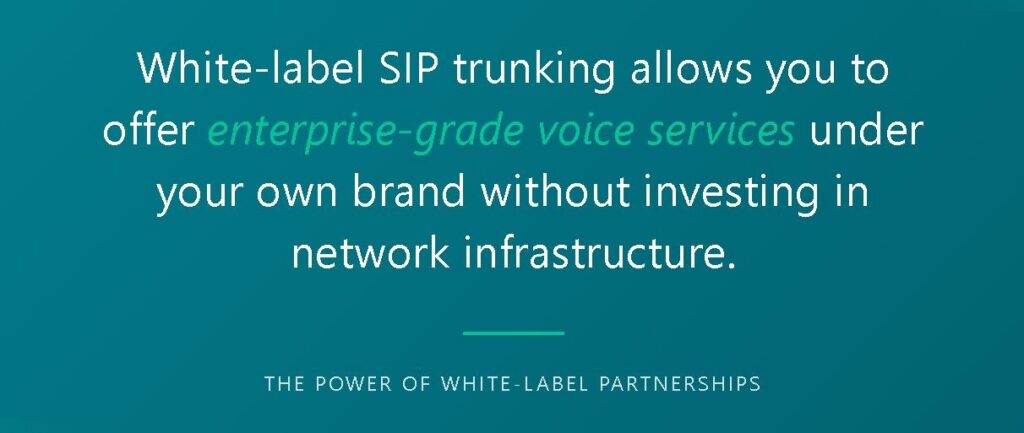
White-label SIP trunking allows you to offer enterprise-grade voice services under your own brand without investing in network infrastructure. Your partner provides the underlying technology, network connectivity, billing systems, and technical support while you maintain control over the customer relationship, pricing, and service experience.
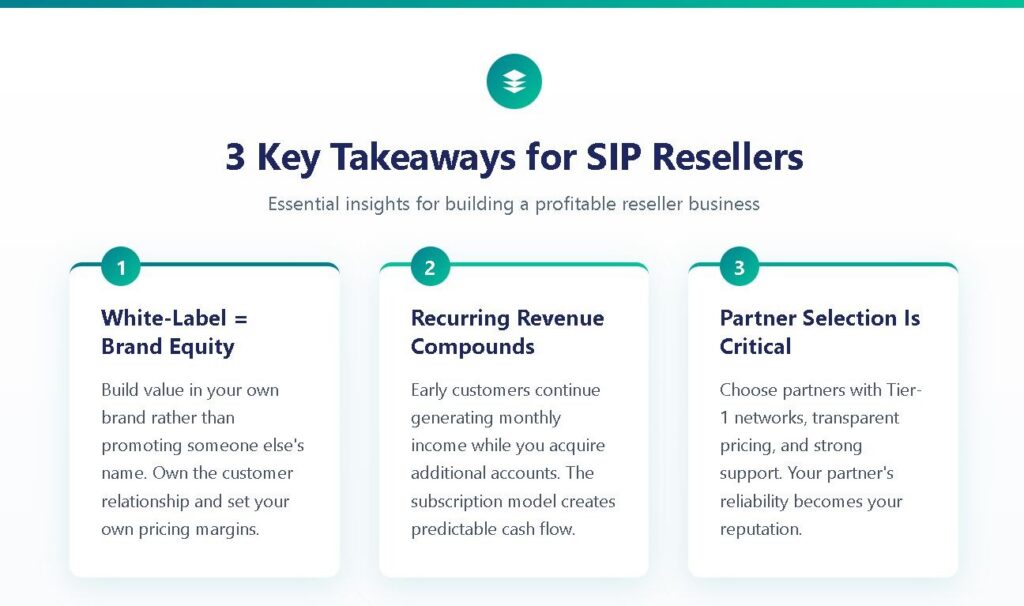
This arrangement creates strategic advantages. You build equity in your own brand rather than promoting someone else’s name. Clients see you as their telecommunications provider, strengthening loyalty. You also retain pricing flexibility, setting margins that reflect the value you deliver.
How Does White-Label Differ From Agent Programs?
White-label programs give you ownership of the customer relationship and typically yield higher profit margins. You handle sales, support, and billing while your partner manages the technical backend. Agent programs offer a simpler entry point with ongoing commissions but lower margins. Many VoIP resellers begin as agents and transition to white-label arrangements as they develop capability.
What Should You Look for in a White-Label Partner?
The partner you choose directly impacts your ability to deliver quality service. Evaluate potential partners on network reliability first, seeking those operating on Tier-1 networks with strong uptime guarantees.
Pricing transparency matters for business planning, so avoid partners with hidden fees or complex minimum commitments. Support quality becomes yours in white-label arrangements, so test responsiveness before committing. Platform capabilities should include easy provisioning tools, comprehensive reporting, and automation features that reduce administrative overhead.
What Are the Top Features to Look for in a SIP Trunking Partner?
Specific features determine your ability to meet diverse client needs. The best providers offer:
- Direct Inward Dials (DIDs): Employees can each have their own phone number from any area code, establishing local presence wherever clients do business.
- Local and Toll-Free Numbers: Multiple numbers pointing to the same SIP trunk enable clients to maintain presence in every market without separate phone systems.
- Fax over IP Service: Essential for healthcare, legal, and government sectors where fax remains standard practice.
- Fraud Protection: Systems that monitor for unauthorized calls and block suspicious activity protect clients from unexpected charges.
Your partner should also support integration with major IP PBX systems, including 3CX, Asterisk, FreePBX, and Microsoft Teams. E911 compliance features ensure clients meet regulatory requirements for emergency calling without additional investment.

How Can SIP Resellers Effectively Market Their Services?
Countries around the world are phasing out traditional Public Switched Telephone Networks, with the UK’s PSTN switch-off now scheduled for January 2027. While this event alone creates opportunities in the market, resellers must tailor their approach for each client. SIP trunking delivers tremendous value, but the technology operates behind the scenes. Your role as a SIP reseller is to educate and consult, not simply to sell.
Create Benefits-Focused Educational Content
Position yourself as a subject matter expert by developing content that addresses prospects’ problems and leads them toward solutions. Fill your blog and social channels with educational material about SIP trunking that clearly explains concepts. Most non-technical clients care about outcomes like cost savings, reliability, and improved customer experience rather than protocol specifications.
Customize Every Pitch to Client Needs
A restaurant’s communication requirements differ from those of a multi-location accounting firm. Invest time in understanding each prospect’s situation before presenting your solution. Learn about their call volumes, growth plans, existing technology, and pain points. This discovery process enables you to propose solutions that directly address specific challenges.
Start With a Niche Audience and Expand
Consider focusing on a specific industry initially. Deep expertise in one vertical allows you to understand unique requirements and build a reputation. Healthcare practices have specific compliance requirements. Law firms need reliable call recording. Real estate agencies benefit from local presence in multiple markets. Mastering one segment positions you to expand with confidence.
What Are the Most Common Mistakes Telecom Resellers Make?
The SIP trunk reseller market offers opportunity, but common pitfalls can undermine success.
Focusing on Product Features Instead of Benefits
Prospects have questions about cost, setup, and functionality, but reciting technical specifications rarely closes deals.
Solution: Lead with the problem you solve. Clients struggling with high phone bills need to hear about cost savings. Those frustrated by limited capacity need to understand how quickly they can scale.
Delivering Generic Pitches
One-size-fits-all approaches fail to connect with prospects whose circumstances differ from your assumptions.
Solution: Research each prospect before meetings. Understand their industry, size, and communication challenges. Tailor presentations to their specific situation.
Dominating Conversations Instead of Listening
When you spend all your time presenting, you miss opportunities to learn what matters to your prospect.
Solution: Ask open-ended questions and let prospects explain their challenges. The information they share provides exactly what you need to position your solution.
Failing to Follow Up Consistently
Prospects who seem ready to buy sometimes go silent due to competing priorities or internal decision processes.
Solution: Implement consistent follow-up processes. Send helpful information rather than just asking for decisions. The SIP reseller who remains top of mind wins when the prospect is ready to act.
Frequently Asked Questions
How much investment is required to start a SIP reseller business?
White-label reseller programs typically require minimal upfront investment. Your primary costs involve business setup, marketing materials, and website development rather than network infrastructure. Some partners require minimum volume commitments, so evaluate these against realistic sales projections.
Do I need deep technical expertise to succeed as a SIP reseller?
Technical knowledge helps but is not required. The best platform partners provide training, documentation, and technical support that allow you to serve clients without building an internal engineering team. Focus on understanding client needs and appropriately positioning solutions.
How long does it typically take to become profitable?
Timelines vary based on existing customer relationships and sales execution. The recurring revenue model means early customers continue generating monthly income while you acquire additional accounts. SIP resellers and VoIP resellers with established client bases often achieve profitability faster than those starting from scratch.
Start Your SIP Trunk Business Today
The telecommunications industry continues its evolution toward IP-based solutions, and businesses are actively seeking partners to guide them through the transition. SIP resellers who combine technical understanding with strong customer relationships will capture an outsized share of this expanding market.
SIPTRUNK offers a reseller program designed for telecom professionals and IT consultants who want to build recurring revenue without infrastructure investment. With no contracts, no upfront costs, and white-label capabilities that put your brand center stage, our platform removes barriers to entry while providing tools to scale. Get started today to build a profitable SIP trunk business.

Mitch leads the Sales team at BCM One, overseeing revenue growth through cloud voice services across brands like SIPTRUNK, SIP.US, and Flowroute. With a focus on partner enablement and customer success, he helps businesses identify the right communication solutions within BCM One’s extensive portfolio. Mitch brings years of experience in channel sales and cloud-based telecom to every conversation.
SIP Trunking
A SIP trunk is a virtual phone line that uses the Session Initiation Protocol (SIP) to deliver voice and other unified communications services over the internet. It replaces traditional telephone lines or PRIs, allowing businesses to make and receive calls using their existing internet connection.
Choosing the Right SIP Trunk Provider
The right provider should offer reliability, easy setup, flexible pricing, and strong support. Look for features like Tier-1 networks, contract-free terms, simple provisioning tools, and responsive technical assistance—especially if you're building a recurring revenue stream as a reseller.
Commissions
SIPTRUNK offers a generous commission program that lets you earn money for as long as your client subscribes to our services. Earn 15% commission for monthly revenue between $1 and $9,999 and 18% if your monthly revenue amount exceeds $10,000.
The Program
No. Simply electronically sign the SIPTRUNK Reseller Agreement and get started selling right away.
Business Operations
One of the great things about working with SIPTRUNK is that we handle all customer billing. When you place an order for a customer, we’ll send them login information and payment instructions. We’ll handle all monthly invoicing and payment processing from there.
The Platform
We have certified a broad range of traditional and open source PBX systems. See the complete list here.