

Best White-Label VoIP Platforms for 2025: Complete Reseller Guide
The VoIP services market is rocketing toward $752.41 billion by 2034, creating unprecedented opportunities for resellers who choose the right white-label platform.
- The best VoIP reseller platforms combine seamless integration capabilities, transparent pricing models, and comprehensive support systems.
- Modern businesses demand flexible, cloud-first communication solutions that can scale instantly without infrastructure investments.
Choose platforms that offer automated provisioning, multi-tenant architectures, and robust API ecosystems to maximize your recurring revenue potential.
Traditional phone systems are becoming obsolete as businesses migrate to cloud-based communication solutions at an accelerating pace. For resellers, this transformation presents a golden opportunity to build recurring revenue streams through white-label VoIP platforms.
Recent data shows the VoIP services market reached $167.3 billion in 2024 and is projected to grow at a compound annual growth rate of 15.80% through 2034. Businesses are saving on communication costs by switching to modern VoIP solutions, creating substantial demand for reseller services.
Selecting the right white-label VoIP platforms requires understanding both current market dynamics and future technological trends. This comprehensive guide examines the leading platforms, their unique advantages, and the criteria that separate exceptional solutions from mediocre ones.
What Makes a White-Label VoIP Platform Worth Choosing in 2025?
The definition of a quality white-label VoIP platform has evolved significantly. Simply offering basic calling features and custom branding no longer meets market expectations. Today’s successful platforms must address complex business requirements while remaining simple enough for rapid deployment.
Market leaders distinguish themselves through genuinely scalable architectures that accommodate everything from five-seat startups to enterprise deployments without infrastructure changes. They also provide comprehensive integration ecosystems that connect seamlessly with popular business tools like CRM systems, accounting software, and productivity suites.
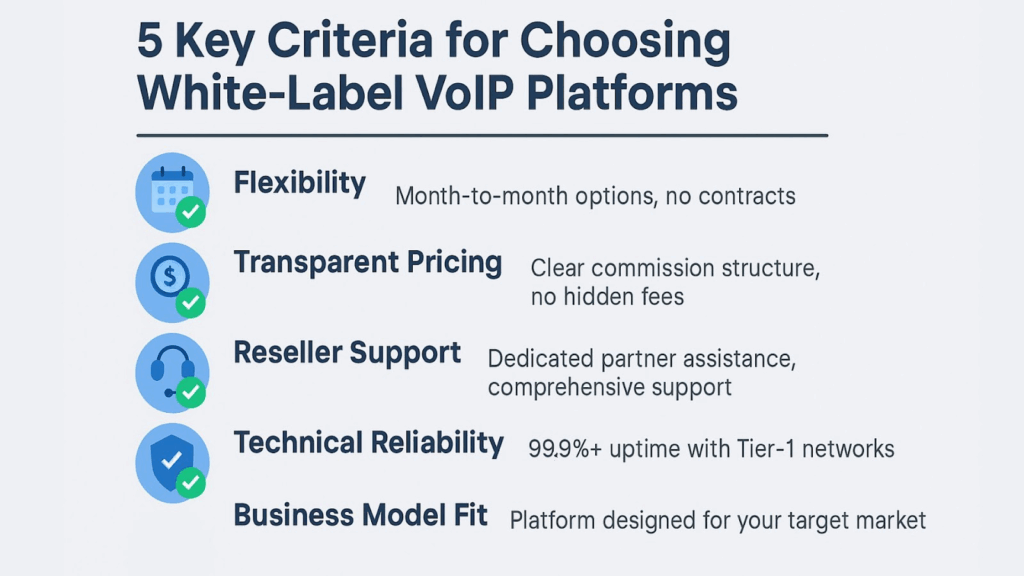
Transparent financial models matter tremendously. Leading white-label VoIP solutions pass genuine cost savings along to resellers and their customers through straightforward pricing structures that avoid hidden fees and unexpected charges. Contract flexibility has become equally important, with successful platforms offering month-to-month options rather than requiring long-term commitments.
Today’s white-label VoIP solutions incorporate video conferencing, team messaging, file sharing, and mobile applications into unified experiences that support hybrid work environments.
Which Features Define the Best VoIP Reseller Platforms?
Understanding feature hierarchies helps resellers evaluate platforms. Essential capabilities fall into several categories, each addressing specific business requirements and technical considerations. With businesses typically saving 30 to 50% on communication costs through VoIP adoption, selecting platforms with comprehensive feature sets becomes vital for demonstrating value to customers.
Infrastructure reliability forms the foundation of any quality platform. Leading white-label VoIP solutions operate on geographically distributed networks with multiple redundancy layers. Look for providers offering Service Level Agreements that guarantee 99.9% or higher uptime, backed by network operations centers that monitor systems continuously.
Administrative capabilities determine how efficiently you can manage customer accounts and resolve issues. Top-tier platforms provide intuitive control panels that allow real-time configuration changes, detailed usage reporting, and automated billing integration. These systems support multi-tenant architectures that keep customer data completely segregated while allowing centralized management.
Integration flexibility has become increasingly important as businesses rely on diverse software ecosystems. Superior white-label VoIP platforms offer robust APIs, pre-built connectors for popular business applications, and webhook systems that enable custom automation workflows.
Customer support deserves careful evaluation. Quality platforms provide multiple support tiers, including technical documentation, partner training programs, and escalation procedures for complex issues. Some providers offer white-label support services, allowing resellers to maintain consistent customer experiences without building internal technical teams.
What Are the Top White-Label VoIP Platforms for 2025?
The following analysis examines leading white-label VoIP platforms based on their reseller support, technical capabilities, and business model flexibility. Each platform serves different market segments and reseller needs, making careful evaluation essential for long-term partnership success.
SIPTRUNK: The Reseller-First Platform Foundation
SIPTRUNK is designed specifically for resellers, offering a turnkey platform that removes the barriers to entering the SIP trunking market. With no contracts or upfront costs, partners can scale at their own pace while maintaining full control of their brand through white-label capabilities. Reliable Tier-1 networks and automated provisioning ensure quick setup and consistent performance, while built-in billing, tax compliance, and commission tracking simplify backend operations. This streamlined, reseller-first approach allows partners to focus on building customer relationships and generating recurring revenue without the overhead of managing infrastructure.
SIPTRUNK is well-suited for resellers who want a flexible, low-barrier entry into SIP trunking without the complexity of managing technical systems.
Viirtue: The Integrated MSP Solution
Viirtue’s ViiBE platform is designed with Managed Service Providers in mind, bringing together VoIP services, automated quoting, and billing into one streamlined system. Its native connections to ConnectWise, QuickBooks, and other MSP tools make it especially appealing for partners already working in those ecosystems. The inclusion of white-label support is another plus, allowing resellers to rely on Viirtue for technical assistance while maintaining their own brand presence. Usage-based pricing with no minimum commitments adds flexibility for MSPs who want to scale at their own pace.
Viirtue is a strong choice for MSPs, though resellers outside that ecosystem may find its specialized integrations less relevant.
RingLogix: The Simplified Approach
RingLogix focuses on simplicity and ease of deployment, making it a good fit for resellers who value straightforward implementations. The platform offers broad compatibility across different phone systems, as well as integrated quoting tools and transparent pricing. Partners often highlight its stability and user-friendliness, while training resources help new resellers get up to speed quickly. This approach provides a solid balance of essential tools without overwhelming partners who prefer a more streamlined platform.
RingLogix works well for resellers seeking stability and ease of use, though those needing advanced tools may want to explore more specialized platforms.
SkySwitch: The Enterprise-Focused Platform
SkySwitch leverages NetSapiens technology to deliver a robust set of enterprise-level communication features. Its platform offers extensive customization options and strong uptime standards, catering to resellers who serve larger business clients with complex needs. For partners who want to differentiate by offering advanced capabilities, SkySwitch provides a wide feature set and the flexibility to tailor solutions for demanding environments.
SkySwitch is ideal for resellers serving enterprise markets, though its depth may feel like overkill for smaller customer segments.
WhiteLabel Communications: The Technical Platform
WhiteLabel Communications appeals to resellers who value technical independence and customization. Built on FreeSWITCH, the platform provides significant flexibility and avoids vendor lock-in, making it ideal for partners with dedicated technical resources who want to design solutions tailored to specific customer requirements. Competitive pricing and open-source foundations further strengthen its appeal for technically sophisticated resellers seeking long-term control and adaptability.
WhiteLabel is best suited for resellers with technical expertise who want maximum control, but it may be less accessible for those seeking turnkey simplicity.
Intermedia: The Enterprise Solution
Intermedia offers a UCaaS suite that goes beyond basic VoIP, including advanced security features and compliance certifications. This platform is attractive to resellers targeting enterprise customers with strict regulatory or operational requirements. Its broad set of communication and collaboration tools, backed by enterprise-grade support, positions Intermedia as a strong choice for partners serving large organizations that prioritize reliability, compliance, and scalability.
Intermedia’s enterprise-grade features shine for large accounts, but its pricing and commitments may be less suitable for SMB-focused resellers.
How Do White-Label VoIP Solutions Compare by Business Type?
Different reseller types benefit from platforms optimized for their specific market approaches and customer bases. Understanding these alignments helps ensure successful partnerships and sustainable growth.
Managed Service Providers typically prefer platforms that integrate billing, support, and communication services into unified solutions. These resellers value automation capabilities that reduce administrative overhead and allow them to focus on strategic customer relationships. MSPs also benefit from platforms that provide comprehensive reporting and analytics for customer success management.
Value-Added Resellers often gravitate toward platforms that emphasize ease of deployment and broad compatibility. VARs frequently work with diverse customer bases and need platforms that can accommodate various technical environments without extensive customization. Simple provisioning and reliable support become critical success factors.
Independent Software Vendors may prefer platforms that offer extensive APIs and customization capabilities. ISVs often need to integrate communication services into broader business solutions and require platforms that support deep technical integration without restricting development flexibility.
Telecommunications agents typically focus on platforms that provide competitive pricing structures and transparent commission models. These resellers often serve price-sensitive customers and need platforms that deliver genuine cost savings while maintaining service quality standards.
What Success Factors Matter Most for VoIP Resellers?
Building a successful white-label VoIP business requires more than selecting the right platform. Several factors determine long-term success and sustainable growth.
How Can Resellers Differentiate Themselves in the Market?
Market positioning plays a major role in reseller success. The most successful partners develop clear value propositions, which might include specialized industry knowledge, superior customer support, or unique integration capabilities that solve specific business problems.
Customer education is important as businesses evaluate communication alternatives. Successful resellers invest time in helping prospects understand the technical and business benefits of modern VoIP solutions. This consultative approach builds trust and often leads to larger initial deployments and higher customer retention rates.
Ongoing support capabilities determine customer satisfaction and reduce churn rates. The best resellers either develop internal technical capabilities or partner with platforms that provide comprehensive white-label support services. Customer issues need resolution quickly to maintain business operations and preserve relationships.
Why Does Revenue Diversification Matter for VoIP Resellers?
Revenue diversification helps insulate reseller businesses from market fluctuations and competitive pressures. Many successful partners combine VoIP services with related offerings like network security, cloud services, or business continuity solutions. This approach increases customer lifetime value and creates multiple touchpoints for ongoing relationships.
What Technology Trends Are Shaping the Future of VoIP Reselling?
Technology trends continue shaping the VoIP software 2025 landscape. Artificial intelligence integration is expanding, completely upending and optimizing how businesses are run. Resellers who understand these trends can position themselves ahead of market demands and capture early adoption opportunities.
The shift toward mobile-first communication continues accelerating. Mobile VoIP usage has reached massive scale, with IT and telecom taking 34.5% of the market. Successful resellers must ensure their chosen platforms provide robust mobile capabilities that support distributed workforces.
Security requirements are becoming more stringent as businesses recognize communication systems as potential attack vectors. The best white-label VoIP platforms invest heavily in security features and compliance certifications that meet evolving regulatory requirements.
Frequently Asked Questions
What is the difference between white-label VoIP and traditional VoIP services?
White-label VoIP allows resellers to offer communication services under their own brand name and pricing structure, while traditional VoIP services are sold directly by the provider. White-label solutions include comprehensive partner support, custom branding capabilities, and revenue-sharing models that enable resellers to build recurring revenue streams.
How much can businesses save by switching to white-label VoIP platforms?
Most businesses save on their communication expenses when switching from traditional phone systems to VoIP solutions. Small businesses average 68% savings with usage-based VoIP plans. These savings come from reduced infrastructure costs, lower per-minute rates, and eliminated maintenance expenses associated with legacy equipment.
What support do white-label VoIP providers offer to their reseller partners?
Leading providers offer multi-tier support, including technical training, marketing resources, customer support services, and dedicated account management. Many platforms provide white-label customer support, allowing resellers to maintain consistent branding throughout the customer experience while leveraging expert technical assistance.
Which industries benefit most from partnering with white-label VoIP resellers?
All industries benefit from VoIP technology, but the highest adoption rates occur among businesses with distributed workforces, including professional services, healthcare, financial services, and technology companies. These sectors typically require reliable, scalable communication solutions that support remote and hybrid work environments.
Grow Your VoIP Reseller Business with the Right Partner
As communication technology continues evolving, selecting the right white-label partner is essential for reseller success. Superior platforms combine technical excellence with business model flexibility, allowing partners to build sustainable recurring revenue streams while delivering genuine value to their customers.
For resellers ready to capitalize on VoIP growth, the time to act is now. Market dynamics favor partners who can move quickly while making informed platform decisions. Among the platforms evaluated, those offering transparent pricing, contract-free flexibility, and comprehensive reseller support provide the strongest foundation for sustainable growth. Get started with a platform that prioritizes reseller success, and discover why leading partners choose SIPTRUNK solutions built specifically for their unique needs.

Mitch leads the Sales team at BCM One, overseeing revenue growth through cloud voice services across brands like SIPTRUNK, SIP.US, and Flowroute. With a focus on partner enablement and customer success, he helps businesses identify the right communication solutions within BCM One’s extensive portfolio. Mitch brings years of experience in channel sales and cloud-based telecom to every conversation.