

Hidden VoIP Reseller Costs (And How to Avoid Them)
The VoIP reseller opportunity is real, but so are the costs that catch newcomers off guard.
- Startup investments vary depending on whether you choose an affiliate model, traditional reseller arrangement, or white-label platform partnership.
- Hidden fees, including regulatory charges, E911 compliance, and tax management, can consume margins if you don’t account for them upfront.
- Platform selection directly determines your cost structure, with some providers requiring thousands in upfront capital while others eliminate startup barriers entirely.
- Understanding the full financial picture before you commit separates successful resellers from those who struggle to reach profitability.
If you’re serious about building a sustainable telecom reseller business, map every expense before signing any partnership agreement.
The VoIP reseller market is one of the most accessible paths into the telecommunications industry. With businesses worldwide demanding flexible, cost-effective communication solutions, the timing is excellent. The VoIP market reached $161.79 billion in 2025 and is projected to grow to $415.20 billion by 2034, expanding at a compound annual growth rate of 11.04%.
Those numbers attract entrepreneurs, IT consultants, and managed service providers eager to capture recurring revenue. Yet many enter the market without fully understanding the VoIP reseller costs that will shape their profitability. The advertised opportunity often glosses over the financial realities that separate thriving reseller businesses from those that never gain traction.
This guide breaks down the true costs of becoming a VoIP reseller, from obvious startup expenses to the hidden charges that erode margins. More importantly, it provides strategies to minimize unnecessary spending while building a profitable SIP trunking business.
What Does It Really Cost to Start a VoIP Reseller Business?
Before committing to any reseller program, you need clarity on both the initial investment and the ongoing operational burden. The range is enormous, and the right choice depends on your business model, technical capabilities, and growth timeline. Understanding VoIP reseller costs at this foundational level prevents costly surprises down the road.
Upfront Investment Requirements
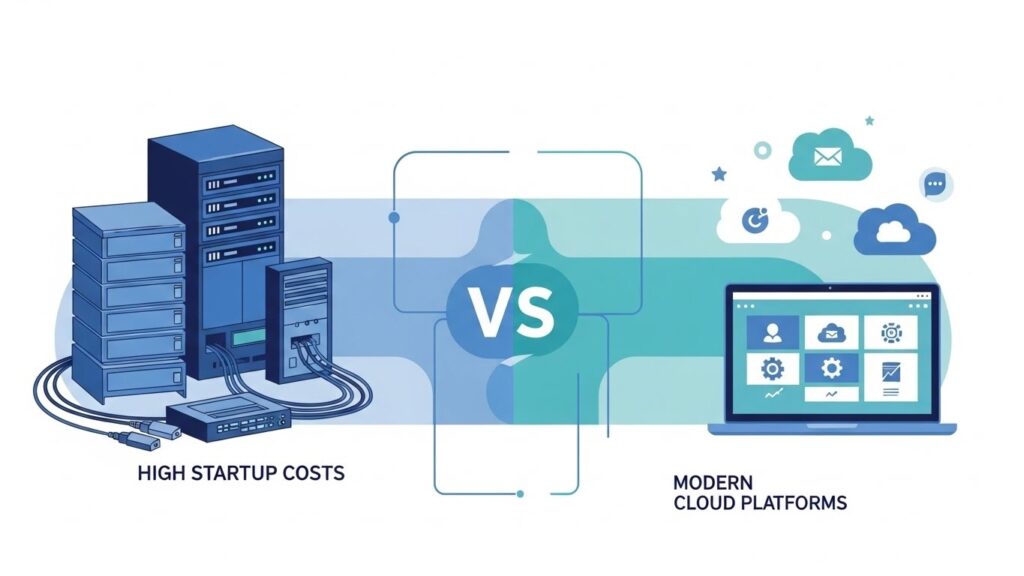
Traditional approaches to entering the VoIP market demanded significant capital. Direct carrier relationships often required substantial minimum monthly commitments, plus setup fees and infrastructure investments that created barriers for smaller businesses. Building your own softswitch infrastructure could easily exceed six figures when accounting for hardware, licensing, and technical expertise.
Modern white-label platforms have changed the game. Many reseller programs now offer entry with zero upfront investment, no contracts, and immediate access to enterprise-grade infrastructure. The tradeoff typically involves revenue-sharing arrangements rather than outright ownership of the technology stack. For most new entrants, this approach reduces financial risk while providing a faster path to market.
Setup fees, when they exist, vary by provider. Some waive these fees entirely but compensate through slightly higher monthly rates. Evaluate the total cost of ownership over your expected business timeline rather than focusing exclusively on initial expenses.
Ongoing Operational Expenses
Monthly costs form the backbone of your VoIP business cost structure. Hosted VoIP services typically cost between $10 and $30 per user per month, depending on features and provider. For resellers working with SIP trunking specifically, per-channel pricing commonly falls within similar ranges for unlimited domestic calling plans. Metered alternatives charge fractions of a cent per minute, which can work well for low-volume customers but becomes expensive as usage increases.
Beyond basic service fees, factor in costs for direct inward dial (DID) numbers, toll-free number provisioning, and any premium features your customers require. Call recording, advanced analytics, and CRM integrations often carry additional monthly charges. Your operational expenses will scale with your customer base, which is healthy as long as your pricing maintains a sufficient margin above wholesale costs.
What Are the Hidden VoIP Reseller Costs Most Providers Don’t Mention?
The expenses that surprise resellers most are rarely the obvious ones. Hidden costs lurk in regulatory requirements, platform limitations, and support gaps that only become apparent after you’ve committed to a provider relationship.

Regulatory and Compliance Fees
Telecommunications services carry regulatory obligations that translate directly into costs. E911 (Enhanced 911) fees typically range from $0.20 to $2.00 per line monthly, funding the infrastructure that connects emergency callers with local response centers. These fees are non-negotiable and must be passed through to customers or absorbed into your pricing.
Universal Service Fund (USF) contributions are another mandatory expense. The FCC requires telecommunications providers to contribute to programs supporting rural connectivity and low-income access. These charges fluctuate quarterly based on federal calculations and can add meaningful costs to each customer account.
State and local taxes vary by jurisdiction, creating compliance complexity for resellers serving customers across multiple regions. Some white-label platforms handle tax calculation and remittance on your behalf, which eliminates administrative burden but may be reflected in wholesale pricing. Understanding VoIP reseller tax obligations before launching prevents compliance headaches later.
Platform and Infrastructure Charges
Not all reseller platforms deliver equal value for their fees. Some providers advertise low per-trunk pricing but charge separately for essential features like number porting, call routing configuration, or access to reporting dashboards. These ancillary charges accumulate quickly and can undermine your projected margins.
Infrastructure requirements deserve careful evaluation. If your chosen platform demands specific hardware, proprietary equipment, or expensive integration with existing systems, those costs impact your true startup investment. The most reseller-friendly platforms offer compatibility with major IP-PBX systems and support standard SIP protocols without requiring specialized equipment purchases.
Minimum monthly commitments are another hidden cost category. Some providers require guaranteed monthly spending regardless of actual usage, which creates financial pressure during your ramp-up period. Platforms offering prepaid or pay-as-you-go models provide more flexibility for businesses building their customer base gradually.
Support and Training Expenses
Technical support costs often remain invisible until you need them. Basic support may be included with your reseller agreement, but premium support tiers, dedicated account management, or after-hours assistance frequently carry additional fees. Evaluate what level of support your business requires and confirm pricing before committing.
Training and certification programs help resellers sell effectively, but some providers charge for these resources. Others bundle comprehensive training into their partner programs at no additional cost. The value of quality training compounds over time through improved sales conversion and reduced customer churn, making this investment worthwhile even when it carries direct costs.
How Do Affiliate Programs Compare to Full Reseller Models?
Understanding the distinction between affiliate arrangements and true reseller relationships helps you select the model aligned with your business goals. Each approach carries different cost structures, responsibilities, and profit potential.
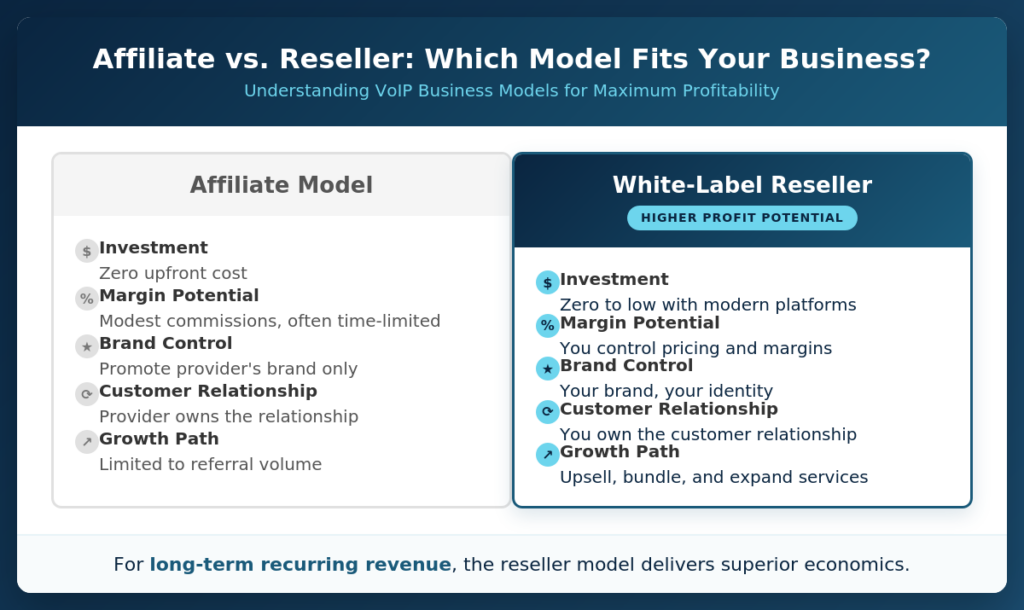
The key differences include:
- Investment Level: Affiliate programs typically require zero financial investment, while traditional reseller arrangements may demand upfront capital for inventory, infrastructure, or platform access. White-label reseller programs eliminate these barriers while still providing full reseller capabilities.
- Operational Responsibility: Affiliates simply refer customers and earn commissions, with the provider handling all service delivery, billing, and support. Resellers take ownership of the customer relationship, managing pricing, support interactions, and ongoing account maintenance.
- Margin Potential: Affiliate commissions are typically modest and often limited to the first year or a defined period. Reseller margins offer greater profit potential when you control pricing and build value-added services around the core offering. Telecom resellers who establish strong customer relationships and provide consultative value routinely achieve margins that far exceed standard affiliate payouts.
- Brand Control: Affiliates promote the provider’s brand, while white-label resellers present services under their own brand identity. This distinction matters for businesses building long-term customer relationships and enterprise value.
- Scalability: Affiliate income depends entirely on referral volume, with limited ability to increase per-customer value. Resellers can expand revenue through upselling, bundled services, and strategic pricing adjustments.
For businesses serious about building telecommunications into a core revenue stream, the reseller model typically offers superior long-term economics despite requiring more operational involvement.
Which VoIP Business Costs Can Resellers Control?
While some expenses remain fixed or mandated, significant cost variables fall within your control. Smart decisions in these areas directly impact profitability.
Pricing Model Selection
Your choice between metered and unmetered pricing models affects both your costs and your customers’ experience. Unmetered plans provide predictable monthly expenses and simplify billing, making them attractive for customers with consistent call volumes. Metered pricing offers flexibility for customers with variable usage but introduces billing complexity and potential cost overruns.
Many successful resellers offer both options, matching pricing models to customer usage patterns. This flexibility requires more sophisticated billing management but allows you to effectively serve diverse market segments. Review your SIP trunk cost structure carefully to determine which models preserve healthy margins across different usage scenarios.
Platform Partner Selection
Your choice of wholesale provider or white-label platform is the single most consequential cost decision you’ll make. Beyond headline pricing, evaluate the total value delivered through support quality, platform capabilities, network reliability, and billing automation.
Platforms that handle billing and tax management eliminate significant operational overhead. Those offering transparent SIP trunk pricing without hidden fees simplify your financial planning. Tier-1 network infrastructure ensures call quality that reduces customer complaints and churn, protecting your long-term revenue.
The lowest wholesale price doesn’t always translate to the best business outcome. A slightly higher per-trunk cost offset by superior support, automated provisioning, and comprehensive billing management often delivers better net profitability than bargain-basement providers requiring extensive manual administration.
How Can You Minimize Costs When Starting a SIP Trunking Business?
Strategic decisions at launch create cost advantages that compound over time. Avoiding common pitfalls protects both your initial capital and ongoing profitability.
Avoiding Common Financial Pitfalls
New resellers frequently underestimate the time required to build a sustainable customer base. Committing to minimum monthly spending requirements or long-term contracts before establishing reliable revenue creates unnecessary financial pressure. Prioritize partners offering flexible terms that scale with your actual business growth.
Overinvesting in marketing before validating your sales process wastes resources. Start with targeted outreach to your existing network and known market segments before expanding advertising spend. Prove your value proposition and refine your sales approach before scaling customer acquisition costs.
Neglecting to account for customer support time is another common oversight. Each customer requires onboarding assistance, ongoing questions, and occasional troubleshooting. Factor this time investment into your pricing to ensure profitability scales appropriately with your customer count.
Maximizing Margin Through Smart Partnerships
The right platform partnership transforms your cost structure. Partners offering clear paths to becoming a VoIP reseller without upfront investment eliminate startup capital barriers. Those providing comprehensive training accelerate your time to revenue. Automated provisioning reduces your operational burden per customer.

Consider the full ecosystem your partner provides. Marketing resources, sales enablement tools, and technical documentation all carry value that offsets direct costs. Partners invested in your success typically deliver better long-term economics than those focused purely on their wholesale margins.
Frequently Asked Questions About VoIP Reseller Costs
What is the minimum investment needed to start a VoIP reseller business? With modern white-label platforms, you can start a VoIP reseller business with zero upfront investment. Many providers have eliminated setup fees, contracts, and minimum commitments, allowing you to begin earning recurring revenue immediately. Your primary initial investment becomes time spent on training, marketing setup, and customer acquisition rather than capital expenditure.
How much profit margin can VoIP resellers realistically expect? Telecommunications resellers who control their own pricing and provide consultative value to customers routinely achieve healthy margins that exceed affiliate-style commission structures. Your actual margin depends on your pricing strategy, wholesale costs, and the additional value you provide beyond basic connectivity. White-label arrangements generally offer higher margin potential than affiliate programs because you maintain pricing control.
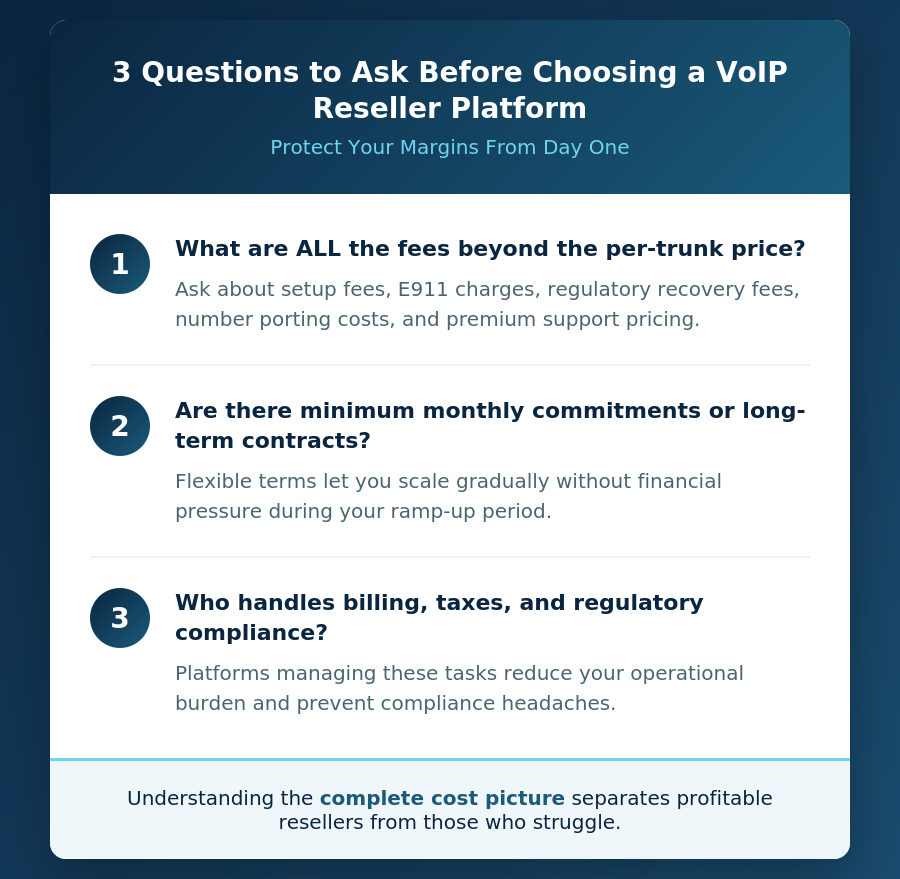
What hidden fees should I ask about before choosing a reseller platform? Request detailed information about setup fees, number porting charges, E911 compliance costs, regulatory fee handling, minimum monthly commitments, premium support pricing, and any charges for features like call recording or advanced reporting. Understanding the complete cost picture prevents margin erosion from unexpected expenses after you’ve committed to a platform.
How do regulatory costs affect VoIP reseller profitability? Regulatory costs, including E911 fees, USF contributions, and state telecommunications taxes, add to each customer account. These are generally pass-through costs that you’ll include in customer pricing, but they must be factored into your rate structures. Platforms handling tax calculation and remittance simplify compliance but may reflect this service in their wholesale pricing.
Building a Profitable VoIP Reseller Business
Understanding VoIP reseller costs before you commit positions you for sustainable success in a growing market. The telecom industry rewards resellers who enter with clear financial expectations, strategic platform partnerships, and pricing models that protect margins while delivering customer value. With the right foundation, a SIP trunking business generates predictable recurring revenue that grows alongside your customer base.
SIPTRUNK offers a white-label reseller platform designed to eliminate traditional cost barriers while providing the infrastructure, support, and tools resellers need to succeed. With no contracts, no upfront costs, and automated provisioning backed by Tier-1 network reliability, you can focus on building customer relationships rather than managing technical complexity. Get started with SIPTRUNK today and discover how the right platform partnership transforms your path to profitability.

Mitch leads the Sales team at BCM One, overseeing revenue growth through cloud voice services across brands like SIPTRUNK, SIP.US, and Flowroute. With a focus on partner enablement and customer success, he helps businesses identify the right communication solutions within BCM One’s extensive portfolio. Mitch brings years of experience in channel sales and cloud-based telecom to every conversation.